

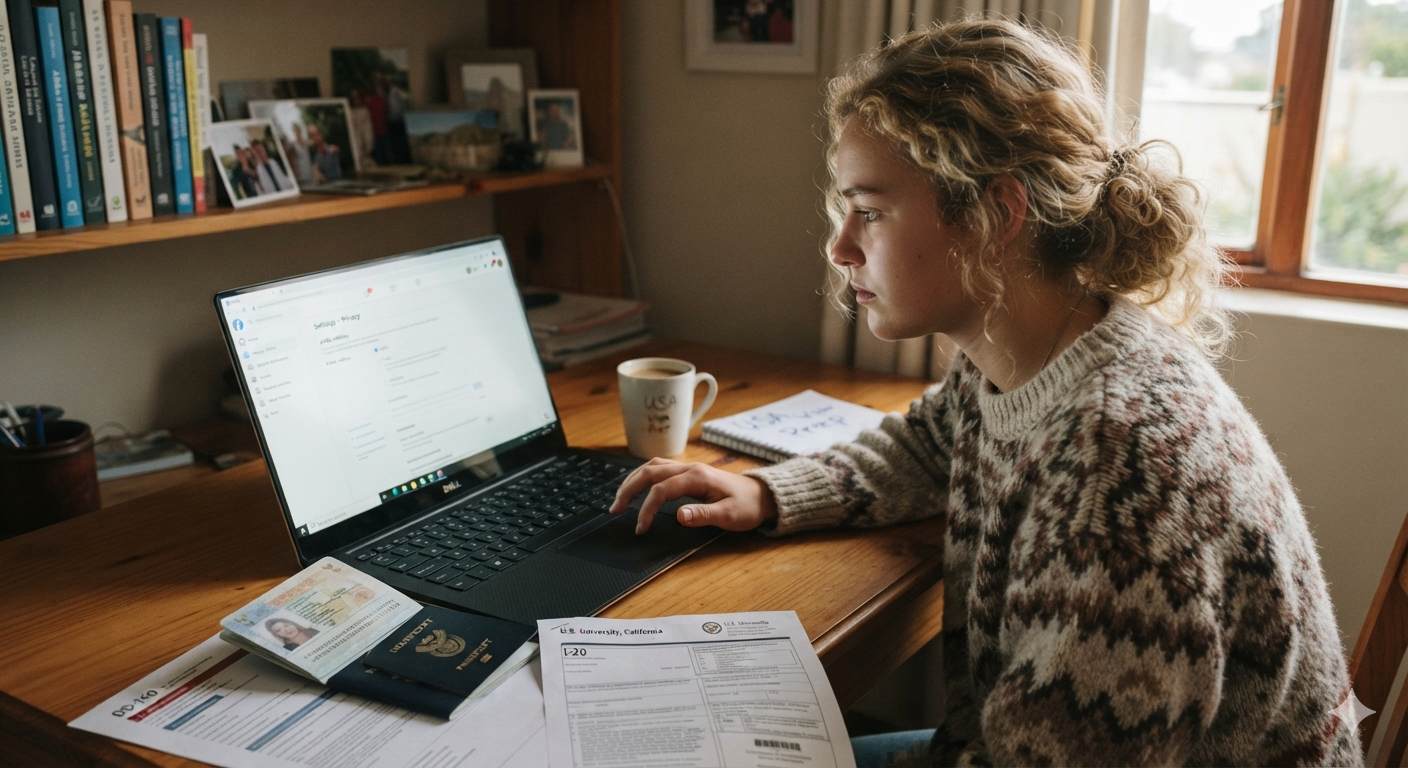
It has been seven years since the United States introduced social media vetting for visa applicants, and yet many F-1 student visa applicants still aren't entirely sure what it actually requires. Since June 2019, the U.S. Department of State has required nearly all visa applicants — including F-1 students — to make their social media profiles public so that a thorough background check can be performed. It's a simple requirement on paper, but there are a few nuances worth understanding before you apply.
The Core Requirement: A Five-Year Social Media History
Consular officers request a five-year history of every social media platform and username you've used. It's important that you list the current username or handle for every account you hold, as well as any accounts you've since deleted, if you can still recall them. When it comes to this part of the application, it's always better to disclose more rather than less — officers have the ability to search further, and an account they find that wasn't declared will raise far more suspicion than one you listed yourself.
If you've lost access to an old account and can't log in to switch it from private to public, you still need to list the username or handle on your application. You are not required to regain access to the account — you're only required to disclose that it exists. Leaving it off entirely because you can't log in can be treated the same as deliberately hiding it, so when in doubt, write it down.
Passwords Are Never Requested
All accounts you list need to be set to public so that officers can review the content directly. It's worth repeating: the U.S. government will never ask for your account passwords or login credentials. On most major social platforms, switching your profile from private to public is all that's required — nothing more.
What Happens If You Don't Comply
Refusing to disclose this information, or deliberately hiding accounts, can cause your application to be denied outright. In more serious cases, it can lead U.S. Citizenship and Immigration Services or the Department of State to find you permanently inadmissible. Being upfront about every account, even an old or embarrassing one, is almost always the safer path.
What Officers Are Actually Looking For
Reviewing an applicant's social media allows officers to screen for a handful of specific risk factors, not to pass judgment on your personality or sense of humor.
Hostile or Extremist Content
Support for terrorist organizations, harassment, or content hostile toward US culture, government or institutions.
Consistency of Intent
Whether your posts match the purpose and length of stay you've declared. Mentioning a five-year plan when you're applying for a shorter visa is a red flag.
Overall Honesty
Whether the story your profiles tell lines up with the rest of your application, including posts and photos you're tagged in by others.
Tips for Students Before You Apply
Before You Submit Your Application
A few minutes of review now can save you a much longer conversation with a consular officer later.
Key Takeaway
Social media vetting isn't designed to catch students out — it's designed to confirm that the story you're telling on your application is the same story your online presence tells. Maintain honesty across your profiles, disclose every account you've ever used, and don't let a forgotten password become a reason an officer questions your transparency.
This article is general guidance, not legal advice. Social media vetting requirements can change and may vary by individual circumstance. Visa Planner Online is an independent visa preparation and educational service and is not affiliated with the U.S. Department of State, USCIS, or any government authority. Approval decisions are made solely by the relevant authority.